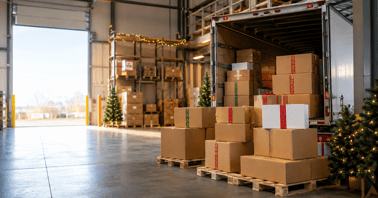
AI in operations and commerce refers to the use of machine learning, automation, and data analysis tools to improve supply chain decisions, reduce costs, and increase operational efficiency. Common applications include demand forecasting, route optimization, and customer service automation.
Where This Conversation Started
The insights in this article come from a roundtable discussion held at the Third Person Retreat in Nashville, Tennessee. Third Person is a community and events platform built for founders and executives across e-commerce brands, 3PLs, and logistics technology companies. Its annual retreat brings together a curated cohort of leaders for an invitation-only, application-based experience focused on building real relationships and exchanging substantive ideas across the industry.
AI was one of several topics during the retreat, bringing together perspectives from operations, technology, and fulfillment. What follows draws on the themes and points of view that came up across that conversation.
The Current State: Delivering in Some Areas, Still Developing in Others
One recurring idea was the distance between how AI is positioned in the market and what it is doing inside logistics operations today. The technology is frequently described as a fully autonomous solution capable of replacing entire teams and running operations without human input. The operational reality tends to be more specific than that.
AI is most effective right now in use cases centered on prediction and optimization. Those are areas where machines can process more variables, more consistently, than manual approaches allow. The return on investment is also more measurable and relatively fast in those cases. Outside of those applications, many AI initiatives in logistics are still in earlier stages, and their long-term impact is less certain.
Gartner projects that by 2030, 50% of new warehouses in developed markets will be designed as “robot-centric” facilities, underscoring how AI-driven automation is shifting from experimentation to core fulfillment infrastructure.
That gap is worth keeping in mind when evaluating options. Starting with a well-defined problem and verifiable outcomes tends to produce better results than moving fast before the problem is fully defined.
Why Data Quality Determines Whether AI Works
One theme that came up consistently was the relationship between AI and the data it depends on. The short version: AI performs as well as the data it runs on. In many logistics environments, that data is fragmented across multiple platforms, inconsistent in format, and frequently delayed or incomplete.
That fragmentation is a genuine barrier to adoption. Even technically sophisticated AI models will produce unreliable outputs when fed poor-quality data. The companies seeing the strongest early returns from AI are, in most cases, those that invested first in data integration and standardization rather than in AI tooling itself.
This has a practical implication for any team evaluating AI: before assessing vendors, assess your data. If key systems do not share information reliably, or if data quality varies significantly across sources, that is the more urgent problem to address.
Where AI in Logistics Is Delivering Results Today
Three application areas stood out as mature and consistently producing positive returns.
Demand Forecasting
AI-driven forecasting improves a team's ability to predict what customers will buy, when demand will occur, and where inventory needs to be positioned. Even modest improvements in forecast accuracy produce downstream effects across the entire supply chain: fewer stockouts, lower carrying costs, and better alignment between labor capacity and actual workload.
Route Optimization
Route optimization is one of the most established AI applications in logistics. These systems analyze delivery locations, traffic conditions, vehicle capacity, and time windows to generate efficient delivery sequences. The results are concrete: reduced fuel consumption, fewer miles driven, lower labor costs, and improved delivery performance. At scale, even small efficiency gains accumulate into significant savings.
Customer Service Automation
AI-powered chat tools are handling a growing share of routine customer inquiries, including shipment tracking, delivery updates, and basic support requests. This reduces inbound volume for human agents and allows support teams to concentrate on complex interactions that require judgment rather than pattern recognition.
How IoT Data Makes AI More Effective in Warehouses
One enabling factor behind AI adoption in warehouse operations is the growth of IoT (Internet of Things) infrastructure. Sensors and connected devices in modern warehouses provide continuous, real-time data on inventory movement, equipment performance, and operational workflows.
This creates an environment where AI systems can detect patterns, flag anomalies, and generate more accurate predictions. Warehouses that have invested in IoT connectivity are better positioned to act on AI outputs because the inputs are current and reliable rather than batched and delayed.
How AI Is Changing Logistics and Operations Roles
The discussion around AI and employment tends toward extremes, and several participants pointed to a more specific pattern: rather than eliminating entire job categories, AI appears to be reducing the number of people needed for certain functions while raising the output expected from those who remain.
Roles Seeing the Most Change
AI and automation are already changing staffing requirements in a few specific areas:
-
Dispatch and route planning, where AI routing tools are reducing the need for manual scheduling decisions.
-
Customer service for routine inquiries, where chatbots are handling a significant share of tracking and support volume.
-
Warehouse operations, where automated systems are processing more throughput with smaller teams.
A similar pattern is visible in software development. AI coding tools are enabling developers to complete tasks significantly faster, which is reducing demand for junior developers and shifting how teams are structured. Organizations are moving toward smaller groups with more experienced members, with AI tools covering much of the output gap.
The Productivity Shift
Across both development and operations roles, the practical effect is that output expectations are rising. Teams using AI tools are expected to produce more, in less time, with fewer people. This shift is already visible in software development and is beginning to appear in planning, customer service, and warehouse management as well.
One way the group framed it: AI is compressing roles rather than eliminating them outright. Fewer people are required to do the same work, and performance expectations are being recalibrated as a result.
How to Think About AI Adoption Based on Your Operation
The right starting point depends on what kind of operation you run. With that in mind, there are a few consistent patterns worth considering.
High-volume delivery operations tend to see the fastest returns from route optimization, provided address and stop data is clean and accessible across dispatch systems. Inventory-heavy fulfillment operations are better served by starting with demand forecasting, but only once sales, WMS, and ERP data are integrated well enough to feed the model reliably.
Customer-facing logistics providers handling high inquiry volumes have a clear case for service automation, particularly chatbots trained on structured inquiry and resolution data. Warehouse operations with existing IoT infrastructure can use that sensor data as the foundation for AI-driven inventory tracking and workflow optimization. And for organizations running large development teams, AI coding assistants are already compressing timelines and reshaping team structures.
In each case, the prerequisite is the same: the data the AI tool depends on needs to be clean, current, and connected before the tool can perform well. Getting that sequencing right tends to matter more than which tool gets selected.
How to Evaluate an AI Investment in Logistics
A pattern that came up: AI initiatives that struggle often do so because the tool was selected before the problem was fully defined, or before the data infrastructure needed to support it was in place. A more deliberate evaluation tends to follow a consistent sequence.
-
Start with a specific operational problem, not a technology category. The question is not 'should we use AI?' but 'where are we losing time, money, or accuracy that better prediction or automation could address?'
-
Audit your data before evaluating tools. Identify where data lives, how current it is, and whether it flows reliably between systems. A clean data foundation is a prerequisite for effective AI, not a byproduct of it.
-
Prioritize use cases with clear, measurable outcomes. Demand accuracy rates, delivery performance, and support ticket volume are examples of metrics where AI impact can be tested and verified.
-
Run a bounded pilot before committing to full deployment. Validate the tool against real operational data in a controlled scope before scaling.
-
Plan for productivity changes, not just cost changes. AI tools raise output expectations. Factor that into team planning and performance benchmarks from the start.
What This Means for Operations Teams
What came through in Nashville was a group of operators thinking carefully about where AI fits into their work right now, not where it might fit eventually. Route optimization, demand forecasting, and service automation came up repeatedly as areas producing real results. Broader applications were discussed with more caution, and the general sense was that the gap between market promises and operational performance is still worth watching.
The organizations that came up as examples of thoughtful adoption shared a few things: a specific problem to solve, enough data infrastructure to support a solution, and a willingness to test before scaling.
━━━━━━━━
Frequently Asked Questions
What is the most practical AI use case in logistics today?
Route optimization and demand forecasting tend to offer the most consistent returns for logistics operations. Both are relatively well-established, produce measurable outcomes, and can deliver initial value without requiring a fully integrated data stack from day one.
How do I know if my operation is ready for AI?
The clearest readiness indicator is data quality. If your core systems share data reliably and your operational data is accurate and current, you have the foundation AI tools require. If data is fragmented or inconsistent across systems, address that first.
What is the difference between AI and traditional automation in logistics?
Traditional automation follows fixed rules: if this, then that. AI systems learn from data and adjust over time, which makes them better suited for variable conditions such as demand shifts, traffic patterns, or changes in customer behavior. The two approaches are often used together in modern logistics environments.
Is there a low-cost way to start with AI in logistics?
Several route optimization and forecasting tools offer entry-level pricing or trial periods. The more relevant cost question is typically the data preparation and integration work required before those tools can perform well, which often exceeds the software cost itself.
━━━━━━━━
About Techdinamics
A lot of what came up during AI discussions at the Third Person Retreat pointed to an integration problem as much as an AI one. Fragmented data, disconnected systems, and inputs that are too unreliable to support good outputs are challenges that no AI tool solves on its own. Techdinamics works with 3PLs, brands, and retailers to connect the systems fulfillment operations run on, automating order flows and creating the data consistency that makes everything downstream work better. To learn more, contact us here.