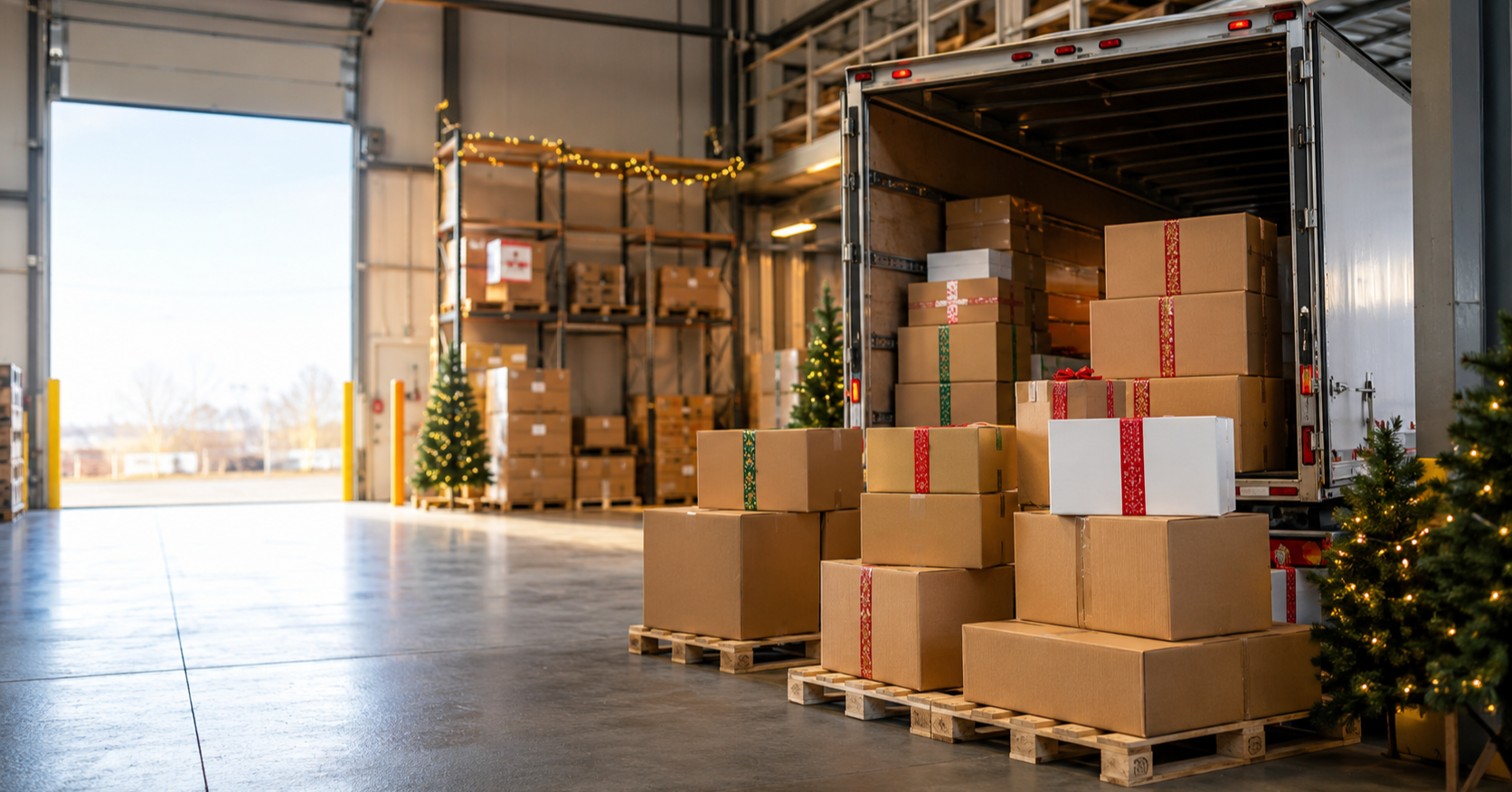
Every year, the same pattern plays out. Operations teams spend months planning for peak season fulfillment. Then volume hits and the plan goes out the window. And the gap between what was planned and what happened becomes the lessons list for the following year.
According to Kase's 2026 peak season survey of 328 retail leaders, 79% still expect to make reactive decisions once volume spikes. That number is not a failure of intent. It is a structural problem. Planning cannot prevent every disruption, but it can determine how quickly teams identify and respond when something goes wrong.
As Adam Lavergne, techOMS Product Manager, put it in a recent techTALK on 2026 fulfillment headwinds: "The next six months is really going to force optimization for resilience."
This article covers what that means operationally, and what retailers, brands, and 3PLs need to put in place before the volume arrives.
Good Enough Is No Longer Good Enough
The fulfillment bar has moved, and three pressures are making this season harder to navigate than the one before it.
Tariffs and margin compression are reshaping production cycles and delivery timelines in ways that are difficult to cost in advance. When a tariff is applied after an order has already been placed, the margin impact lands with no way to absorb it. That pressure doubles when it meets delays on the delivery side.
Inventory fragmentation is compounding the risk. When systems are disconnected, inventory updates lag. That lag creates the conditions for overselling. A marketing campaign built around a product that has not arrived, or that has been sold across two channels simultaneously without synchronization, generates customer service problems before a single order ships.
Social commerce has made demand forecasting structurally harder. A product that is not on anyone's radar today can go viral and become a top seller within 48 hours. Operations that cannot respond to that kind of demand spike will miss sales and damage the customer experience at the same moment.
Inventory Readiness Starts Before the Orders Arrive
Having enough inventory is only half the question. The other half is whether it is in the right place, connected to the right systems, and visible in real time across every channel pulling from it.
The operational risk is precision, not volume. Blanket inventory increases can reduce one risk while creating another. More stock helps prevent stockouts but can also lead to overstock, higher storage costs, and margin erosion if demand shifts unexpectedly. The goal is to know which SKUs are moving, from which locations, at what rate, and where the next shortage is forming before it affects fulfillment.
Clare Zeltner, Partnerships Coordinator at Techdinamics, outlines the inventory and channel readiness questions every operation should be able to answer before peak season begins:
- Are you marketing correctly relative to what you have in stock?
- Do you have a strong enough inventory portfolio to project for changes?
- Are you looking at different channels you are selling on?
- Do you have alerts when something is running low?
- Do you have a draft status when you need a supervisor to approve a decision before it moves forward?
- Are you monitoring for overselling across all connected channels?

Low stock alerts that trigger reorder points automatically before a product runs out are one of the highest-value and lowest-effort configurations an operation can make before peak. The logic is simple and the cost of not having it is a stockout during the highest-demand window of the year.
For operations using techOMS, low stock alerts, reorder triggers, and draft status rules are configurable without hard-coding. They run automatically, including across geographic exceptions or high-risk order types, keeping the fulfillment floor clean through the highest-volume days.
Carrier Diversification Is Your Risk Shield
Single-carrier dependency is a peak season liability. Strikes, capacity ceilings, fuel surcharges, and lane-specific disruptions are now recurring features of the peak season environment, not exceptions to it. The operations that absorb those disruptions without service level failures are the ones that built carrier redundancy before they needed it.
Carrier diversification is not about having a list of backup options. It means having those carriers already integrated, tested, and rate-shopped so they can be activated without delay. A carrier that has never been used in production is not a backup. It is a project.
The industry standard going into 2026 is to have a defined disruption response plan that can be activated within 48 hours when a carrier, inventory, or system issue moves off plan. That plan should identify which carriers cover which lanes, at what cost, and with what lead time. For a deeper look at why carrier diversification has become a competitive advantage for 3PLs, this article breaks it down further.
techSHIP connects to 200+ carriers across national, regional, and final-mile networks. Real-time rate shopping evaluates the full carrier mix at the moment of each shipment, which means switching to an alternative carrier does not require manual repricing or label reconfiguration. The system selects the best available option based on the conditions configured for that account.
Automation Is What Separates Reactive from Predictive
Peak season volume does not slow down for manual processes. Every step that requires a human decision at the shipping station, the exception queue, or the reporting dashboard is a potential bottleneck at the worst possible time.
Kase's survey found that 96% of retail leaders are already using automation to manage peak complexity, including order routing, inventory allocation, carrier selection, and exception handling. The question is not whether to automate. It is whether the automation is configured correctly before volume arrives.
The customer experience layer is where automation has the most visible impact. Here is what Clare recommends asking before peak:
- Are you helping your VIP customers who spend hundreds of dollars with you each year?
- Are you upgrading them to expedited services automatically?
- Are you adding a thank you gift or a personal note to their order?
- Are you taking the optimal route to pick these orders?
- Do you have too many manual touchpoints that technology should be handling?
VIP customers identified by channel tags can be automatically upgraded to an expedited carrier without anyone at the shipping station making that decision. High-value orders can be flagged for supervisor review before they ship. A thank you card or promotional insert can be added as a pickable SKU to qualifying orders, triggered automatically by order value or customer tag. These rules run without human involvement once configured, which means they perform at 3 AM on the highest-volume day of the year exactly as they do on any other day.
The customer experience that retains buyers is not just about speed. It is about consistency. An order that feels considered, accurate, and on time builds the kind of trust that survives a single bad experience. An order that feels like it went through a generic process does not.
Do Not Wait Until January to Think About Returns
Returns are a second operational peak, and they begin the moment holiday gifting ends. Most peak season planning treats returns as a post-season problem. Operations that treat them as a pre-season decision are better positioned to protect both service levels and margin.
A returned item that sits unprocessed for two weeks cannot be resold during a seasonal window. Building the return workflow before the season is what allows the warehouse to process returns at volume without disrupting outbound fulfillment during the same period.
Before peak season begins, operations should have confirmed answers to:
- Which products are eligible for returns, exchanges, or store credit?
- How quickly will refunds or credits be issued?
- Which items can go back to sellable stock immediately, and which require inspection?
- Who owns returns exceptions when volume spikes?
- How will customer service communicate return status proactively?
Returns planning is the preparation step most likely to be deferred until it is too late. Operations that build it into the pre-peak checklist alongside inventory and carrier readiness avoid the compounded pressure of managing outbound peak volume and inbound returns volume simultaneously.
How Techdinamics Helps You Get There
Peak season preparation is not one decision. It is a set of connected decisions across inventory, carriers, automation, customer experience, and visibility. The operations that make those decisions before volume arrives are the ones that spend peak season executing rather than reacting.
What those decisions have in common is that each one protects your Perfect Order Rate at the exact moment it is hardest to hold: an order that is accurate, on time, complete, and undamaged, at four times normal volume.
The Techdinamics suite covers the full span of that preparation. techOMS manages order routing, inventory allocation, customer-specific rules, exception handling, and fulfillment channel connections through a configurable rules engine that requires no hard-coding. techSHIP manages carrier selection, rate shopping, label generation, tracking visibility, and billing accuracy across its full carrier network. Together, they form the operational foundation that peak season readiness depends on.
Techdinamics is also actively building toward event-driven operational intelligence: not just dashboards that show what happened, but systems that surface the information operations teams need to make decisions before a disruption compounds. As Adam frames it: "Not just dashboarding, but dashboarding that gives you the information you need to make operational decisions."
For context on how visibility and delivery promises connect to peak season readiness, see our articles on end-to-end shipment visibility and what a delivery promise actually requires.
━━━━━━━━
Frequently Asked Questions
What is peak season in fulfillment?
Peak season in fulfillment refers to the period of significantly elevated order volume that coincides with major retail and holiday events, including back-to-school, Black Friday, Cyber Monday, and the December holiday window. For most ecommerce brands, 3PLs, and retailers, peak season represents the highest-volume and highest-pressure period of the operational year, when fulfillment speed, accuracy, and resilience are most visible to customers and most consequential to the bottom line.
How do you prepare for peak season in ecommerce?
Effective peak season preparation covers five areas: inventory readiness, including placement strategy and low-stock alerts configured before volume arrives; carrier diversification, so alternative carriers are integrated and tested before they are needed; automation configuration, so order routing, customer rules, and exception handling run without manual intervention at volume; returns planning, so the post-holiday return surge does not disrupt outbound fulfillment; and visibility, so operations teams can identify and respond to exceptions in real time rather than after impact has compounded.
How does carrier diversification help during peak season?
Carrier diversification reduces dependence on any single carrier's capacity, pricing, or service reliability during peak season. When one carrier hits its volume ceiling, experiences labor disruptions, or raises surcharges, an operation with a diversified carrier mix can shift volume without service level failures. The key is having alternative carriers already integrated, rate-shopped, and tested in the platform before they are needed.
What fulfillment processes should be automated before peak season?
The highest-value automation targets before peak season are order routing rules, which assign orders to fulfillment locations based on real-time inventory and carrier data; exception handling rules, which hold, flag, or escalate specific orders without manual review; customer experience rules, which automatically apply upgraded services or add-ons to VIP or high-value orders; and low-stock alerts, which trigger reorder points before a stockout affects fulfillment. These automations perform identically at 3 AM on the highest-volume day as they do at any other time, which is their operational value during peak.
How should 3PLs prepare their clients for peak season?
3PLs should involve clients in peak season preparation conversations well before volume arrives, covering promotional calendars, SKU-level forecasts, inventory placement decisions, carrier diversification strategy, delivery promise parameters, and exception workflows. A 3PL cannot protect service levels during peak if it discovers a client's promotional plan or inventory position after the season has already started. The 3PLs that separate from the field during peak are the ones whose clients have provided the planning inputs that allow proactive rather than reactive decision-making.
When should peak season preparation begin?
Peak season preparation for Q4 should begin no later than August or September, with carrier integrations, automation rules, and inventory positioning decisions finalized before October. Surcharges from major carriers typically activate in early to mid-October. Promotional campaigns that pull demand forward into September and October can generate fulfillment pressure before traditional peak windows open. Operations that wait until November to finalize carrier backup plans, configure automation rules, or align inventory placement are already behind.
━━━━━━━━
Peak season preparation starts now. Talk to the Techdinamics team about getting your operation ready.